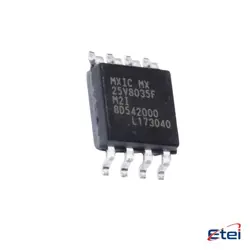
Изображения являются только для ссылки
GD25Q256DFIGR
+БОМIC FLASH 256MBIT SPI/QUAD 16SOP
-
ПроизводительКомпания GigaDevice Semiconductor (HK) Limited
-
Мфр. Часть #GD25Q256DFIGR
-
В наличии5995
365 Дни гарантии качества
7*24 часы обслуживания каранти
90-гарантия послепродажного дня
Гарантия подлинного продукта
Спецификации
| Атрибут | Ценность |
| Package | Tape & Reel (TR),Cut Tape (CT) |
| ProductStatus | Not For New Designs |
| MemoryType | Non-Volatile |
| MemoryFormat | FLASH |
| Technology | FLASH - NOR |
| MemorySize | 256Mb (32M x 8) |
| MemoryInterface | SPI - Quad I/O |
| ClockFrequency | 104 MHz |
| WriteCycleTime-WordPage | 50µs, 2.4ms |
| Voltage-Supply | 2.7V ~ 3.6V |
| OperatingTemperature | -40°C ~ 85°C (TA) |
| MountingType | Surface Mount |
| Package/Case | 16-SOIC (0.295, 7.50mm Width) |
Обзор
Description
The GD25Q256DFIGR is a high-performance serial Flash memory device manufactured by GigaDevice. This memory chip offers a capacity of 256 megabits (32 megabytes) and is designed to provide reliable data storage solutions for a variety of applications, including consumer electronics, industrial systems, and embedded devices.
Key features of the GD25Q256DFIGR include a Serial Peripheral Interface (SPI) for efficient data transfer, support for dual and quad I/O modes to enhance data throughput, and uniform 4KB sectors for flexible memory organization. The device operates over a wide voltage range, typically from 2.7V to 3.6V, ensuring compatibility with various system environments.
It also incorporates advanced security features such as block protection, write protection, and software/hardware-based data protection mechanisms to prevent unauthorized access and data corruption. The GD25Q256DFIGR is designed for high endurance and reliability, offering up to 100,000 program/erase cycles per sector and data retention of up to 20 years.
Packaged in a compact form factor, this Flash memory device is suitable for space-constrained applications and supports extended temperature ranges, making it versatile for diverse operating conditions.
Key features of the GD25Q256DFIGR include a Serial Peripheral Interface (SPI) for efficient data transfer, support for dual and quad I/O modes to enhance data throughput, and uniform 4KB sectors for flexible memory organization. The device operates over a wide voltage range, typically from 2.7V to 3.6V, ensuring compatibility with various system environments.
It also incorporates advanced security features such as block protection, write protection, and software/hardware-based data protection mechanisms to prevent unauthorized access and data corruption. The GD25Q256DFIGR is designed for high endurance and reliability, offering up to 100,000 program/erase cycles per sector and data retention of up to 20 years.
Packaged in a compact form factor, this Flash memory device is suitable for space-constrained applications and supports extended temperature ranges, making it versatile for diverse operating conditions.
Equivalent
The GD25Q256DFIGR is a 256Mb (32MB) Serial NOR Flash Memory chip. Equivalent products include:
1. Winbond W25Q256JV
2. Micron MT25QL256ABA
3. Macronix MX25L25645G
4. ISSI IS25LP256D
5. Cypress S25FL256S
These chips share similar specifications and are often used in applications requiring high-density flash memory. Always verify specific requirements and compatibility with the manufacturer's datasheets.
1. Winbond W25Q256JV
2. Micron MT25QL256ABA
3. Macronix MX25L25645G
4. ISSI IS25LP256D
5. Cypress S25FL256S
These chips share similar specifications and are often used in applications requiring high-density flash memory. Always verify specific requirements and compatibility with the manufacturer's datasheets.
Features
The GD25Q256DFIGR is a 256 Mbit (32 MB) Serial Flash Memory with the following key features:
1. Memory Architecture: Organized as 32,768 pages of 256 bytes each, with a total of 4,096 sectors or 512 blocks.
2. Interface: Supports a standard Serial Peripheral Interface (SPI) with modes 0 and 3, as well as Dual/Quad I/O SPI for faster data transfer rates.
3. Performance:
- Fast read speeds with a maximum clock frequency of up to 133 MHz.
- Supports Dual Output (DOFR) and Quad Output Fast Read (QOFR).
4. Voltage Range: Operates at a voltage range of 2.7V to 3.6V.
5. Endurance and Data Retention:
- Provides at least 100,000 program/erase cycles per sector.
- Data retention of up to 20 years.
6. Security Features: Includes block protection, top or bottom, sector locking, and 4KB parameter sectors.
7. Operating Temperatures: Designed to operate in a wide temperature range, typically from -40°C to 85°C.
8. Package Type: Available in compact SOIC-16 package.
These features make it suitable for use in a variety of applications including consumer electronics, industrial control, and automotive systems.
1. Memory Architecture: Organized as 32,768 pages of 256 bytes each, with a total of 4,096 sectors or 512 blocks.
2. Interface: Supports a standard Serial Peripheral Interface (SPI) with modes 0 and 3, as well as Dual/Quad I/O SPI for faster data transfer rates.
3. Performance:
- Fast read speeds with a maximum clock frequency of up to 133 MHz.
- Supports Dual Output (DOFR) and Quad Output Fast Read (QOFR).
4. Voltage Range: Operates at a voltage range of 2.7V to 3.6V.
5. Endurance and Data Retention:
- Provides at least 100,000 program/erase cycles per sector.
- Data retention of up to 20 years.
6. Security Features: Includes block protection, top or bottom, sector locking, and 4KB parameter sectors.
7. Operating Temperatures: Designed to operate in a wide temperature range, typically from -40°C to 85°C.
8. Package Type: Available in compact SOIC-16 package.
These features make it suitable for use in a variety of applications including consumer electronics, industrial control, and automotive systems.
Pinout
The GD25Q256DFIGR is a 256 Mbit (32 MB) serial Flash memory chip manufactured by GigaDevice. It typically comes in an 8-pin package configuration. Here’s a brief overview of the pin functions:
1. CS# (Chip Select): Activates the chip when low.
2. DO (Data Out)/SO (Serial Output): Outputs data from the chip.
3. WP# (Write Protect): Protects the memory from being written accidentally.
4. GND (Ground): Ground reference for the chip.
5. DI (Data In)/SI (Serial Input): Inputs data into the chip.
6. CLK (Clock): Provides the clock signal for data communication.
7. HOLD#/Reset: Pauses communication temporarily without deselecting the device.
8. VCC (Supply Voltage): Powers the chip.
These pins support standard SPI (Serial Peripheral Interface) operations, enabling data to be read, written, and erased. The GD25Q256DFIGR is used for storing firmware, settings, and other data in various electronic devices.
1. CS# (Chip Select): Activates the chip when low.
2. DO (Data Out)/SO (Serial Output): Outputs data from the chip.
3. WP# (Write Protect): Protects the memory from being written accidentally.
4. GND (Ground): Ground reference for the chip.
5. DI (Data In)/SI (Serial Input): Inputs data into the chip.
6. CLK (Clock): Provides the clock signal for data communication.
7. HOLD#/Reset: Pauses communication temporarily without deselecting the device.
8. VCC (Supply Voltage): Powers the chip.
These pins support standard SPI (Serial Peripheral Interface) operations, enabling data to be read, written, and erased. The GD25Q256DFIGR is used for storing firmware, settings, and other data in various electronic devices.
Manufacturer
The manufacturer of the GD25Q256DFIGR is GigaDevice Semiconductor (Beijing) Inc. GigaDevice is a Chinese company known for its expertise in the design and development of memory products, microcontrollers, and other semiconductor solutions. Founded in 2005, the company has established itself as a leader in the semiconductor industry, providing a range of flash memory products, including NOR Flash, NAND Flash, and other embedded storage solutions. GigaDevice's products are widely used in consumer electronics, industrial applications, and data storage devices, among other sectors. The company is recognized for its innovation and commitment to delivering high-performance and reliable semiconductor products to meet the demands of various global markets.
Application
The GD25Q256DFIGR is a serial NOR Flash memory chip with 256 Mbit capacity, commonly used in various applications such as:
1. Consumer Electronics: Used in smartphones, tablets, and wearables for storing firmware and application data.
2. Industrial Automation: Facilitates reliable data storage in control systems and IoT devices.
3. Networking Equipment: Supports configuration data and firmware storage in routers and switches.
4. Automotive Systems: Used for infotainment system storage and other electronic control units.
5. Embedded Systems: Provides non-volatile memory for microcontroller-based applications.
6. Medical Devices: Stores critical data and software in diagnostic and monitoring equipment.
These applications benefit from its high-speed operation and reliable data retention capabilities.
1. Consumer Electronics: Used in smartphones, tablets, and wearables for storing firmware and application data.
2. Industrial Automation: Facilitates reliable data storage in control systems and IoT devices.
3. Networking Equipment: Supports configuration data and firmware storage in routers and switches.
4. Automotive Systems: Used for infotainment system storage and other electronic control units.
5. Embedded Systems: Provides non-volatile memory for microcontroller-based applications.
6. Medical Devices: Stores critical data and software in diagnostic and monitoring equipment.
These applications benefit from its high-speed operation and reliable data retention capabilities.
Package
The GD25Q256DFIGR is a 256Mb serial NOR Flash memory device from GigaDevice. It typically comes in an 8-pin SOP (Small Outline Package) or similar compact package suitable for space-constrained applications. This package type supports standard SPI protocols, enabling easy integration and reliable performance in a variety of electronic devices.