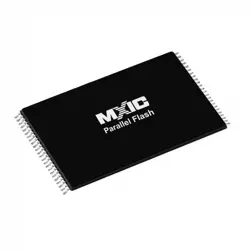
Изображения являются только для ссылки
M29W320ET70N6E
+БОМ32Mbit 2.7V~3.6V Parallel TSOPI-48 Memory (ICs) RoHS
-
ПроизводительМикрон
-
Мфр. Часть #M29W320ET70N6E
-
Лист данных M29W320ET70N6E DataSheet
-
В наличии5615
365 Дни гарантии качества
7*24 часы обслуживания каранти
90-гарантия послепродажного дня
Гарантия подлинного продукта
Спецификации
| Атрибут | Ценность |
| Packaging | TSOPI-48 |
| Interface | Parallel |
| Memory Size | 32Mbit |
| Operating Temperature | -40℃~+85℃ |
| Voltage - Supply | 2.7V~3.6V |
| Data Retention - TDR (Year) | 20 Years |
| Page Programming Time (Tpp) | 10us |
| Program / Erase Cycles | 100,000 cycles |
| Standby Supply Current | 100uA |
| Block Erase Time(t BE) | 6s@(64KB) |
Обзор
Description
Key features include:
- Architecture: 32Mbit organization, typically in a x8 or x16 configuration.
- Interface: It supports standard parallel interface for easy integration with microcontrollers and other digital systems.
- Programming: The memory is programmable using a standard byte or page write method, allowing flexibility in data handling.
- Erase Capability: It supports sector-based erase, enabling efficient memory management.
- Endurance: Designed for high endurance, it can withstand a significant number of write/erase cycles.
This chip is commonly used in applications such as firmware storage, data logging, and other embedded systems where non-volatile memory is required.
Equivalent
Features
1. Memory Type: NOR Flash memory, allowing for random access and easy data manipulation.
2. Interface: Parallel interface, compatible with standard memory protocols.
3. Access Time: 70 ns, providing fast read operations.
4. Voltage Range: Operates on a supply voltage of 2.7V to 3.6V, suitable for low-power applications.
5. Programming: Supports both byte and word programming, with an average programming time of 10 ms.
6. Endurance: Typically 100,000 write/erase cycles, ensuring reliability over multiple programming operations.
7. Data Retention: Guaranteed data retention of up to 20 years, making it ideal for long-term storage.
8. Sector Architecture: Features a flexible sector architecture allowing for efficient data management.
These features make the M29W320ET70N6E suitable for various applications, including consumer electronics, automotive systems, and industrial devices.
Pinout
### Pin Functions:
1. Address Pins (A0 - A19): Used for selecting memory addresses.
2. Data Pins (D0 - D7): Enable data input/output.
3. Control Pins:
- CE# (Chip Enable): Activates the device.
- OE# (Output Enable): Enables data output.
- WE# (Write Enable): Initiates write operations.
- RESET#: Resets the device.
4. VPP: Program/Erase voltage.
5. GND: Ground connection.
6. VCC: Supply voltage.
This device supports sector erase and byte programming, making it suitable for various embedded applications.
Manufacturer
Application
1. Embedded Systems: Firmware storage in microcontrollers and embedded devices.
2. Consumer Electronics: Data storage in devices like digital cameras, set-top boxes, and gaming consoles.
3. Automotive Applications: Storing critical software in automotive control systems.
4. Industrial Equipment: Firmware and configuration data in industrial automation devices.
5. Networking Equipment: Storing system software in routers and switches.
Its versatility and non-volatile nature make it suitable for any application requiring reliable memory storage.
Package
Frequently Asked Questions
Q: What is the memory density and interface type of the M29W320ET70N6E?
A: It is a 32Mbit (4MB) parallel NOR Flash memory, using a standard parallel interface via TSOPI-48 package.
Q: What is the supported supply voltage range?
A: The device operates with a single supply voltage of 2.7V to 3.6V, suitable for low-voltage embedded systems.
Q: What is the operating temperature range?
A: It is rated for industrial temperature range from -40°C to +85°C, ensuring reliable performance in harsh environments.
Q: How fast is the page programming and block erase?
A: Typical page programming time is 10µs, and block erase time (64KB sector) is 6 seconds, enabling efficient code updates.
Q: What is the data retention and endurance specification?
A: It offers 20 years of data retention and a minimum of 100,000 program/erase cycles per sector for long-term reliability.
Q: What is the standby supply current consumption?
A: The typical standby supply current is 100µA, which helps minimize power consumption in battery-powered applications.
Q: Does this device support simultaneous Read/Write operations?
A: No, this is a standard NOR Flash. It does not support simultaneous read/write; operations are sequential based on command sequences.