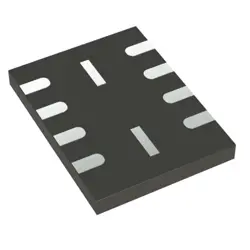
Изображения являются только для ссылки
Спецификации
| Атрибут | Ценность |
| Package | Bulk |
| Series | i.MX25 |
| ProductStatus | Active |
| CoreProcessor | ARM926EJ-S |
| NumberofCores/BusWidth | 1 Core, 32-Bit |
| Speed | 400MHz |
| RAMControllers | LPDDR, DDR, DDR2 |
| GraphicsAcceleration | No |
| Display&InterfaceControllers | Keypad, LCD, Touchscreen |
| Ethernet | 10/100Mbps (1) |
| USB | USB 2.0 + PHY (2) |
| Voltage-I/O | 2.0V, 2.5V, 2.7V, 3.0V, 3.3V |
| OperatingTemperature | -40°C ~ 85°C (TA) |
| Package/Case | 400-LFBGA |
Обзор
Description
The MCIMX257CJM4A is an i.MX25 series microcontroller from NXP Semiconductors, based on the ARM9 core. It operates at 400 MHz and integrates peripherals like USB OTG, Ethernet, CAN, and LCD controllers, making it suitable for industrial and embedded applications.
Key features:
- ARM926EJ-S core (32-bit RISC)
- 128KB SRAM, 64KB ROM
- 16/32-bit DDR2/LPDDR, NAND Flash support
- Multiple I/Os: UART, SPI, I²C, PWM, ADC
- Power-efficient design (1.0V–1.8V operation)
Common uses include HMI, IoT gateways, and control systems. Its balance of performance and low power makes it ideal for cost-sensitive, connected devices.
Key features:
- ARM926EJ-S core (32-bit RISC)
- 128KB SRAM, 64KB ROM
- 16/32-bit DDR2/LPDDR, NAND Flash support
- Multiple I/Os: UART, SPI, I²C, PWM, ADC
- Power-efficient design (1.0V–1.8V operation)
Common uses include HMI, IoT gateways, and control systems. Its balance of performance and low power makes it ideal for cost-sensitive, connected devices.
Equivalent
The MCIMX257CJM4A is an i.MX25 ARM9-based processor. Equivalent alternatives include:
1. NXP i.MX28 series (e.g., MCIMX283DVM4B) – Similar ARM9 core with enhanced peripherals.
2. STMicroelectronics STM32MP1 (Cortex-A7 + M4) – Higher performance but more complex.
3. TI Sitara AM335x (Cortex-A8) – Better performance for embedded Linux.
For direct ARM9 alternatives, consider NXP LPC32xx or Microchip SAM9x60. Check pin compatibility and feature requirements.
1. NXP i.MX28 series (e.g., MCIMX283DVM4B) – Similar ARM9 core with enhanced peripherals.
2. STMicroelectronics STM32MP1 (Cortex-A7 + M4) – Higher performance but more complex.
3. TI Sitara AM335x (Cortex-A8) – Better performance for embedded Linux.
For direct ARM9 alternatives, consider NXP LPC32xx or Microchip SAM9x60. Check pin compatibility and feature requirements.
Features
The MCIMX257CJM4A is an i.MX25 series microcontroller by NXP, featuring:
- ARM9 Core: 400 MHz CPU for embedded applications.
- Memory: 128 KB SRAM, supports external DDR2/NAND/NOR Flash.
- Connectivity: USB 2.0 OTG, 10/100 Ethernet, CAN, SPI, I2C, UART.
- Multimedia: LCD controller (up to WQVGA), touchscreen support.
- Security: Hardware encryption (AES, SHA-1, RNG).
- GPIOs: Up to 117 configurable pins.
- Operating Conditions: 1.8V–3.3V I/O, industrial temp range (-40°C to +85°C).
- Package: 400-ball MAPBGA (17x17mm).
Ideal for industrial control, IoT, and HMI applications.
- ARM9 Core: 400 MHz CPU for embedded applications.
- Memory: 128 KB SRAM, supports external DDR2/NAND/NOR Flash.
- Connectivity: USB 2.0 OTG, 10/100 Ethernet, CAN, SPI, I2C, UART.
- Multimedia: LCD controller (up to WQVGA), touchscreen support.
- Security: Hardware encryption (AES, SHA-1, RNG).
- GPIOs: Up to 117 configurable pins.
- Operating Conditions: 1.8V–3.3V I/O, industrial temp range (-40°C to +85°C).
- Package: 400-ball MAPBGA (17x17mm).
Ideal for industrial control, IoT, and HMI applications.
Manufacturer
The MCIMX257CJM4A is a microprocessor manufactured by NXP Semiconductors, a global leader in embedded processing solutions. NXP specializes in automotive, industrial, IoT, and connectivity applications, known for high-performance, energy-efficient chips. The MCIMX257CJM4A is part of NXP's i.MX family, designed for industrial and consumer embedded systems.
NXP, headquartered in the Netherlands, emerged from Philips' semiconductor division and is a key player in semiconductor innovation.
NXP, headquartered in the Netherlands, emerged from Philips' semiconductor division and is a key player in semiconductor innovation.